
Special Ed and transportation highlighted at School Com
Classification and transportation highlighted
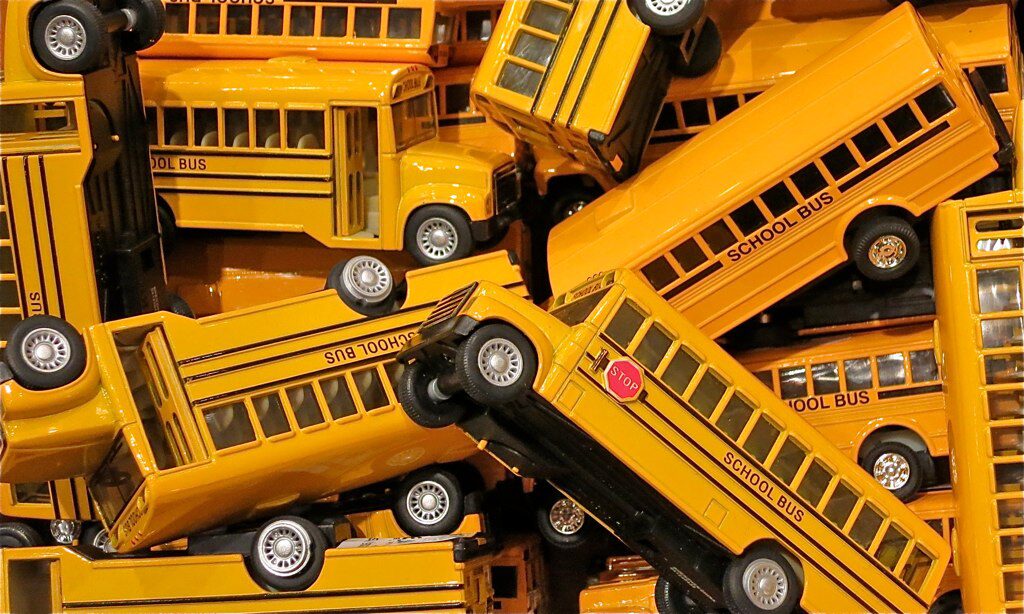
The Norwood School Committee went through several of its cost centers – divisional categories within its budget – at its most recent meeting on Jan. 14 at the Savage Center.
The budget has been a particular concern this year as a potential budget override and tax increase have been discussed as a real possibility this year. Norwood has a budget deficit of about $7 million, and while free cash has been able to plug those gaps in the last few budget cycles, it’s not going to be around forever, and so Town and School departments have been tightening their belts in anticipation of the vote.
Norwood Business Official Sean Mannion and Norwood Public Schools District (NPS) Director of Student Services Kate Davey went through the upcoming fiscal year 2027 budgets for the NPS Transportation Department and the Special Education Department, respectively.
On both fronts, there is relatively good budgetary news. In special education, the overall projected cost is looking to go down about $1 million, and transportation is looking to remain the same. These are somewhat related occurrences, since out-of-district placements for special education – required transportation of special education students to outside school districts with the required special education services – is a state-mandated function that can run up big costs. NPS Superintendent Timothy Luff said it’s always changing year-to-year, as tuition and transportation must be paid for each student, and different educational services have different costs.
“It’s hard to decipher (individual cost), because you could have one residential placement that costs upward of $600,000, and that could be a huge outlier that shifts all these pieces,” he said.
Luff was asked about this since the out-of-district transportation and tuition is currently estimated to cost the district $10 million (but down from $11 million in FY26) by School Committee member Judith Bromley, as $10 million seems like a lot and a lot of students (68 out-of-district students total as of 2025-26 school year, down from 72 in 2024-25).
Bromley asked if this was comparable to other nearby municipalities. Davey said there are comparable numbers in places like Dedham (50) or Seekonk (40s).
“Some of the factors as well are, what are your in-district programs?” Davey said, pointing out that having more in-district programs means fewer students need transportation to other districts. “A lot of districts send them out instead of building the programs; some districts keep them or assign a one-to-one. Everybody has a different philosophy on it, and I think that’s reflected in the numbers.”
Davey said that the district has had 64 move-ins this year, with seven of them needing out-of-district placements, 18 require in-district programming, and three need one-to-one instruction as prescribed by their incoming individualized education plan (IEP). She did note too, however, that the budget decrease of this coming year is a result of 55 leaving the program, either from graduation or moving to other districts.
Davey also said that increasing the offerings here in Norwood, as the district has been doing slowly but surely over the years, is decreasing the number of out-of-district placements.
“We are continually working, as the audit showed, to build our programs, to build our skills and strategies to have students be able to stay, as well as when we do start to talk out-of-district with our families, we immediately start to talk with them about what the criteria would be for them to come back,” she said. “What do we need to build in-district, and what do we need to learn about the student to be able to service their needs in Norwood?”
The total special education budget for FY27 is expected to be a little over $23 million, about $800,000 less than last year’s $23.9 million.
Luff and Mannion said right now the numbers are looking good for special education and transportation budgets, but each added that it’s not over until all students are signed up in August. Move-ins and referrals can always change that, but Mannion said transportation is looking to remain level-funded this year, despite several big changes in the system.
And level-funded is a matter of perspective. Mannion said since 2021, transportation costs and services have doubled from $2 million to $4 million. The cost increase can be at least partially attributed to the use of 40 vans and seven minibuses for special education, as opposed to 25 vans and five buses in 2021. In staffing, that equates to 52 van drivers, eight CDL bus drivers, and 28 monitors. And that’s not counting the $1.3 million for drivers of the 16 regular yellow buses.
That being said, the district is seeing a decrease in special education transportation, which peaked in 2023-24 at 311 students and is now at 268. Regardless, Mannion said the system is straining, as there are no backup vans or minibuses. If one breaks down, others have to pick up the slack and that impacts everyone, creating further delays and costs. He added that even with the redistricting of the elementary schools coming next year, the 16 yellow buses are at capacity.
Luff commended Davey for her work to decrease out-of-district placements by increasing offerings in Norwood.
“Because they are high; let’s be clear they are high,” he said. “They need to be reduced; things are being done to do that. I think Ms. Davey has directed our Director of Out-of-District Placement to look at five different students who are out-of-district and consider what can we do to bring them back into the programs.”
About the author
Jeff Sullivan Covers local news and community stories.
More in this section
Hospital, veteran banners, and Town Meeting at Selectmen
Planning Articles might get own Town Meeting
September 24, 2026
Comments