
Spotted lanternfly infestation confirmed in Norwood
State asking residents to report insect activity
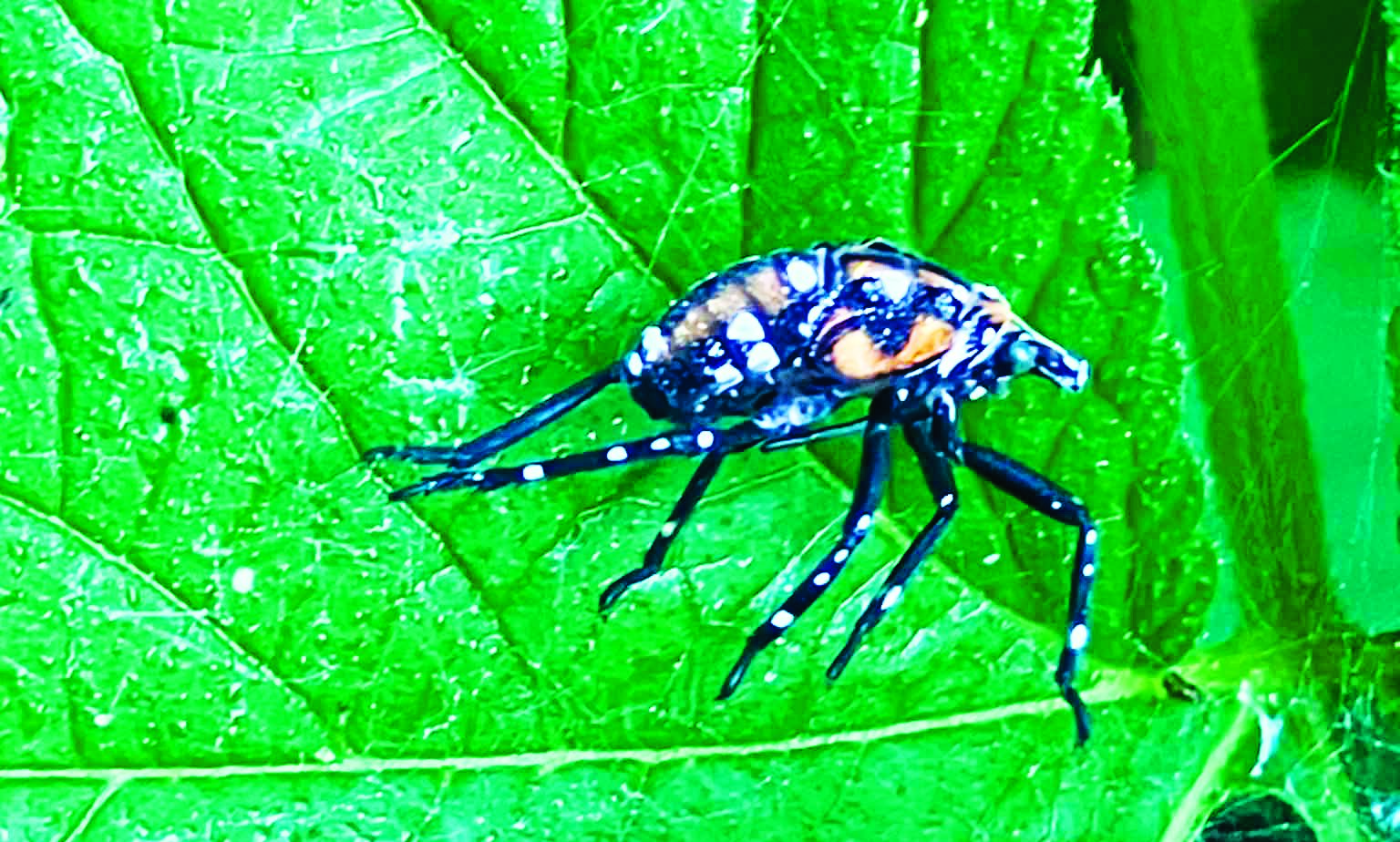
The spotted lanternfly is a relatively famous invasive insect, mainly because of its bright coloring during its adult phase and its unusually spotted pattern during its nymph phase.
The best way to fight them, according to the state, is with powerful suction, but more on that later.
The insects can damage trees and bring more unwanted pests into a concentrated area, and according to Massachusetts Department of Agricultural Resources (MDAR) Environmental Biologist Jennifer Forman-Orth, there has been a confirmed report from MDAR surveyors in Norwood.
“We’ve gotten a few more reports,” she said, noting since the initial announcement late July that there have been more reports in Town.
She said the infestation was found because of a report from a neighbor.
“Actually in the neighboring Town of Westwood,” she said. “And when our surveyor went out to follow up, she also ended up checking some nearby sites in Norwood that looked like they have good potential for lanternfly and found many infested trees in the northern part of the Town.”
Forman-Orth said she can’t be very specific here, as many of the infestations were on private property, but she did say it was in the area of Route 1 around where Westwood and Norwood meet.
“The other reason we try to keep it kind of vague is we haven’t surveyed the entire Town, and this time of year, our surveyors are super busy,” she said. “They go out, they check a number of trees in the area, and then they have to go on to some other part of the state. It’s unlikely that the infestation is restricted to the few trees the surveyor logged, it’s probably also in other places.”
That being said, Forman-Orth said that the spotted lanternfly isn’t as dangerous to trees as you might think, but they’re still a big problem. The bugs use their needle-like mouths to drill into trees – that’s true – and they can kill a tree. But Forman-Orth said their preferred tree is also an invasive species, the Tree of Heaven, which was heavily planted as ornamental trees in the U.S. because it grows fast.
“You’re not likely to find it in a heavily forested area,” she said. “Their primary host tree is the Tree of Heaven, which is itself an invasive species, and tends to be found in more urban areas. For instance, the edge of a parking lot, along a highway, a railway or a commuter rail. So it’s more in the business or industrial zone areas in the northern part of Town.”
She said, however, that the flies will eat other plants and trees, and have been known to kill saplings and young trees of many native species.
“Its second favorite host plant is grape vines, and we have several species of grapes native to Massachusetts,” she said. “Grape vines provide fruit and shelter for wildlife, there are a lot of native insects that only use grapes as host plants, and so we’re concerned about that as well. There are also farmers growing grapes for table grapes, jam, and there are some wineries here as well. So there is an agricultural and environmental impact as well from this pest.”
She added that Massachusetts doesn’t have extensive mono-crop farming, like the Midwest, and is not as vulnerable to the insect because of this.
Forman-Orth said the other negative aspect of this insect is that its waste is a sugary sap that attracts other stinging insects, which can make the outdoors unpleasant for people.
“They are starting to cause problems in other cities and towns where the infestations have been going on for several years and they’re getting kind of large,” she said.
So what can we do? Both Forman-Orth and the state recommend reporting lanternfly sightings via https://gvimes.link/lntrnfly so that surveyors can come in, confirm the sightings and do their thing.
“For now, we don’t know a lot about exactly what’s going on in Norwood outside that area,” she said. “So we would definitely like a report, preferably with a photo if they could get one, of the insects. We give specific advice to those who are dealing with large numbers of property so they can manage it.”
This is where that suction mentioned earlier comes in. Forman-Orth said there are pesticides, biological agents like the fungus Beauveria bassiana, which is effective at killing lanternflies. But like the pesticides, it kills most insects.
“It’s a general killer of insects,” she said. “In some cases in other states they’ve found lanternflies that had been attacked by it.”
You can buy it as a biological pesticide online – https://gvimes.link/fngspst – but Forman-Orth recommended a much simpler approach.
“I don’t know if it’s something that’s easy to acquire or use, so honestly the first thing we recommend to people seeing large numbers of these pests on their property is to just see if there’s a way they can remove them,” she said. “Rather than saying immediately, ‘Can you apply a chemical or something?’ we tell people to trap them to get them off your property. Even if you have a canister vac or a shop vac, you can just suck them up in a vacuum. That’s a really great pesticide-free option if you’re trying to manage pests.”
She added what they recommend for residents is what they use in the field.
“Our surveyors actually have backpack, battery-operated vacuums,” she said. “Sometimes they go out to heavily infested sites and just suck them up.”
And they can get to high levels if left unchecked. Forman-Orth said the species, for an unknown reason at this time, tends to swarm, which has caused problems for some very unlikely ventures.
“I believe the vacs started in New York where the state was using the vacuums on cruise ships that were in port in New York and were scheduled to go out to sea and had lanternflies on them,” she said.
Forman-Orth said they don’t really know why the lanternflies congregated on a cruise ship. Even if there are potted plants on the ship, they’re unlikely to be good hosts and there won’t be enough of them to be an attraction. It’s just likely that the swarm accidentally moved in.
If you’re looking for an infestation, Forman-Orth said to look for the insect itself. It doesn’t eat the leaves, so the damage will happen on the inside. The main way it takes out trees – at least the Tree of Heaven and saplings – is by sucking out the tree’s sap directly from the woody parts of the plant, so the damage is not readily apparent. Its waste is a sugary liquid that can coat leaves and impedes photosynthesis, and in large numbers the loss of sap can kill the tree.
The waste, along with the tree’s open wound dripping sap, attracts stinging insects that are a problem for us, but it also attracts mold that can get into the tree through the wound and eventually kill it.
So if you see one, report it and try to get it off your property.
For more information on managing the pest, go to https://gvimes.link/lntrnflymgmt
About the author
Jeff Sullivan Covers local news and community stories.
More in this section
Hospital, veteran banners, and Town Meeting at Selectmen
Planning Articles might get own Town Meeting
September 24, 2026
Comments