
Guild Dam be only slightly dammed
ConCom finds third option
The Norwood Conservation Commission (ConCom) met recently and discussed the ongoing issue of the dam at the Guild Pond, along with finishing up some very, very old business.
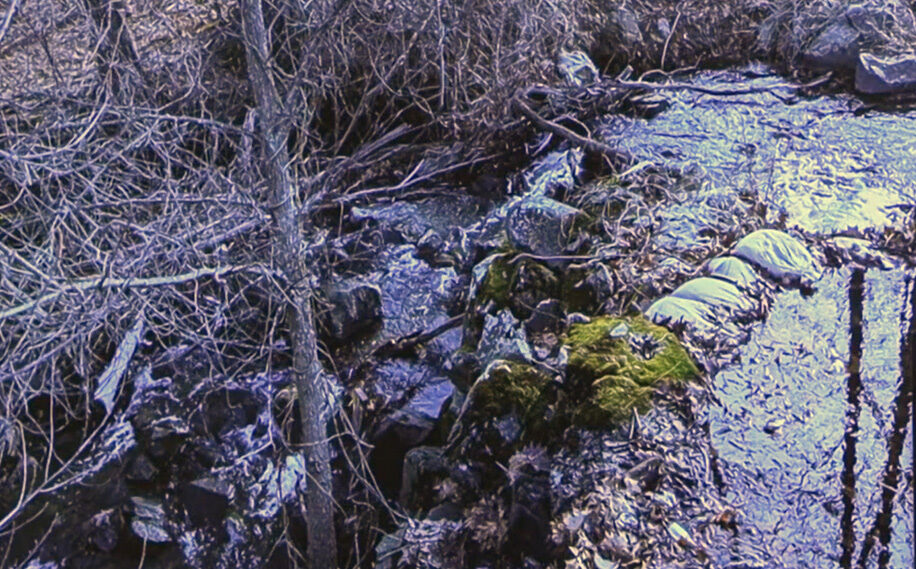
For Guild, the ConCom got back the expected lifespan of two options for a temporary dam and spillway at Guild Pond. For a bit of a refresher, the Norwood Sportsman’s Association at 576 Nichols St. has a pond in the back of it. The pond is part of the stream and wetland system that leads from Willett Pond to Ellis Pond, and back in the 60s a dam was put in place to create a small fishing and boating pond for the club.
Now the dam is falling apart, and Town Meeting members already voted to give $200,000 of Community Preservation Act (CPA) funding to a feasibility study – a study Conservation Agent Carly Rocklen confirmed at this ConCom meeting was still in the procurement/bidding process and a ways out from completion – to see if it was worth the Town replacing.
In the meantime, the ConCom commissioned a much smaller study – about $15,000 – to figure out smaller, less expensive fixes.
It should be noted here that the Sportsman’s Association had been shoring up the dam with sandbags on and off for the past few years to keep the club’s youth fishing derby going every year.
The cheapest option presented by the consultant, Pare Engineering, was sandbags, with a price range from $166,000 to $293,000. The concrete coffer block dam, the other alternative, was priced between $185,000 and $323,000. This gave the ConCom pause last month when those numbers came out.
The ConCom voted to continue the meeting because members were unclear as to how long each option would last, and what those funds would be buying for the club.
In the interim, the Association has been shoring up the dam with sandbags and a new protective layer to keep the bags from sunlight, which has been known to degrade such measures.
In any case, the ConCom got the results back from Pare recently: an engineered sandbag dam would get the dam about two-to-three years of active life, whereas a potential $323,000 dam would get about five years. Both options would be covered with a protective liner and stone rip-rap to make it more durable and easier on the eyes.
However, Rocklen said Pare advised that after five years the abutments around the dam would start to erode, also leading to failure.
ConCom Vice Chair Catherine Walsh said she was leaning toward the current as-needed fixes for the dam until the feasibility study is completed and a permanent plan of action is established. So one might ask: why do the temporary fix if the feasibility study could come back with a result stating a new dam is infeasible?
“I know it’s not optimal but a few hundred thousand dollars is a lot of money,” she said.
Sportsman’s Association Secretary Michael Regan said the current sandbags are holding up well because they put in a liner of their own, similar to a koi pond liner.
“It really seems to be helping,” he said.
“So I think we’re all kind of leaning towards monitoring the situation, not pursuing either of these options and keeping dialogue open with the Sportsman’s Association to make sure that the dam is preserved for the time being,” ConCom Chair Kelsey Quinlan said. “And if any more sandbags need to be put in, we’ll discuss it.”
The ConCom agreed.
On to the old business, the proponents at 206 Dean Street – a part of Kerry Place, the property is that row of buildings off of Dean Street just west of the MonkeySports Superstore that hosts a variety of businesses – sought a certificate of compliance from the ConCom. Attorney Daniel Calinda, representing the owners at 206 Dean St., said his clients, the Martignetti Family, bought their section of the property back in the 80s.
“This project was initiated by other developers 43 years ago in 1983, and at that time, Kerry Place didn’t exist,” he said.
Calinda said the original developers, Reardon & Reardon, received an order of conditions in 1983, and the parents of the current owners bought and developed three lots of the properties in 1986. Then in 1997 the original developers filed an application for a certificate of compliance that never appeared. He said during a 1997 ConCom meeting with the commission, then Conservation Agent Al Goetz found that everything was in order and recommended a certificate of compliance, but no certificate was issued after that meeting.
“It seems to just fall off in an abyss after this, and no certificate of compliance was issued,” he said.
Calinda added that they had received a certificate of compliance from the state on the state’s wetlands protections.
The Board agreed the plan complied and that the certificate of compliance was applicable and voted to issue one.
About the author
Jeff Sullivan Covers local news and community stories.
More in this section
Planning Board approves Tiny Pillars site plan
Chair invited by BOS to discuss bylaw articles
October 8, 2026
Norwood Housing Authority hosts farmers market, resource fair
Helps families with food and fun
October 8, 2026
ConCom preventing encroachment, weighing up fines and lanternflies
Guild Pond Feasibility Study Oct. 8
October 8, 2026
Comments