
School Com has IMPACT
Drug reduction program discussed, funding uncertain
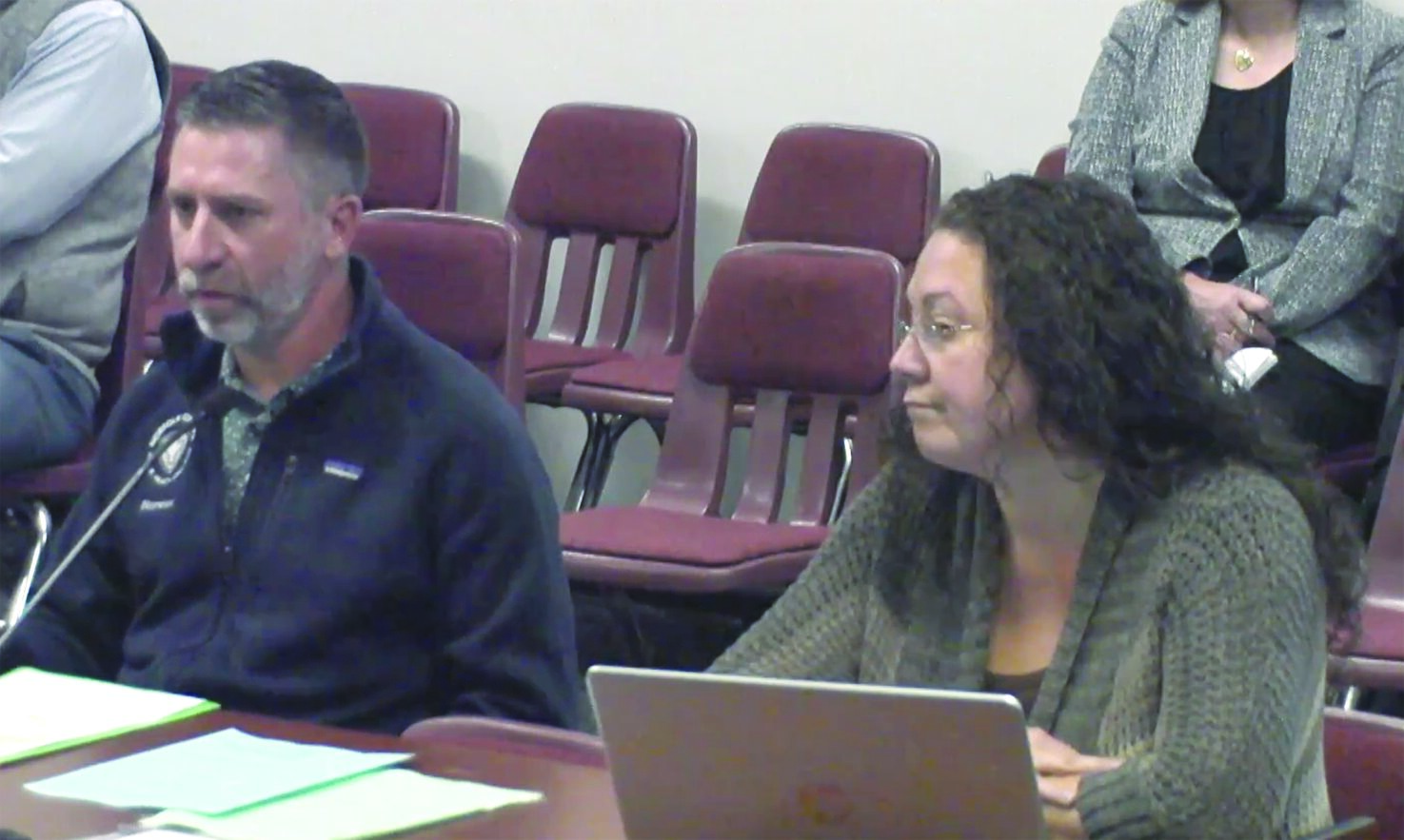
Members of the IMPACT Norwood Coalition were on the docket at last week’s Norwood School Committee meeting at the Savage Education Center at 275 Prospect Street.
IMPACT Program Director Conor Brosnan and Steering Committee member Theresa Stewart came by to share information on the most recent Metrowest Adolescent Youth Survey, which tracks substance abuse and other harmful behavior in several participating school districts.
Brosnan shared a video of himself and former Norwood Public Schools (NPS) Director of Wellness Ryan Quigley sharing tidbits of the data. The full survey for Norwood High School (NHS) can be found at https://gvimes.link/nhs2025srvy and the full survey for the Coakley Middle School (CMS) can be found at https://gvimes.link/cms2025srvy
The survey has been going on every three years for the last nine years, and has collected data both in Norwood and throughout the Metrowest area to help schools dedicate resources to the negative trends directly affecting them.
For instance, if chewing tobacco is the biggest trend in one district and vaping is in another, the survey helps districts to direct youth substance abuse materials to the problems that are most affecting them, rather than a one-size-fits-none approach. Last year was the most recent year the survey took place, and Brosnan said the results were relatively recently released. This was the fourth such survey.
On the whole, Brosnan and Quigley said the trends are heading downward in both populations, at least for substance abuse.
“The data from the 2025 survey reveals continued significant progress in reducing substance misuse in our high school students,” Brosnan said. “For example, electronic vapor product use, also known as vaping, dropped from 31.2 percent in 2018, to just 6.8 percent in 2025. Additionally, current alcohol use dropped from 25.3 percent to 10.1 percent in the same period.”
Brosnan said NHS also now has lower average rates of substance abuse across the board than the Metrowest area average. He also added that the Coakley is seeing drops in substance use as well.
“These positive trends can be attributed to the dedicated prevention efforts of NPS and wellnesss departments, IMPACT Norwood, and the many other Town departments that contribute to our prevention efforts and the ongoing self-education of our students and parents,” Brosnan said. “It’s clear that when it comes to drug and alcohol use, our students are making informed choices for their health and wellbeing. However the work is not done.”
Quigley said students also showed improvements in their average responses to health and wellness questions, dealing with issues like stress, school/life balance, and social interactions. However, both Quigley and Brosnan said they have seen increases in other harmful behaviors.
“Although trending downward, bullying at the middle school level continues to be a concern, with 31 percent of seventh and eighth graders saying they have been victims of bullying on school property,” said Brosnan. “Additionally, 26.1 percent of male students at the Coakley report being involved in a physical fight in the last year.”
Quigley said there are also increases in smartphone usage among the populations, with 61.2 percent of high school students reporting three or more hours a day on their phones.
“And this doesn’t even count school work,” he said. “At the Coakley School, 40.5 percent of students reported spending a similar amount of time on social media alone. Along with this, many male students, particularly at Coakley, have engaged in gambling in the last 12 months, 26.4 percent of male students at the CMS disclosing they have gambled.”
Quigley said these trends are concerning, but noted they have been reported at similar numbers across the Metrowest survey district.
The gambling is actually on a downward trend for both CMS and NHS, with 21.2 percent reporting gambling in the last 12 months in 2023 and 20.8 percent in 2025. The NHS numbers were 11.8 percent in 2023 to 10.4 percent in 2025. The Metrowest average for middle schoolers is 19.5 percent and for high schoolers is 15.8 percent.
As to funding, Brosnan said the group is on year nine of a 10-year grant from the U.S. Centers for Disease Control (CDC) grant that funds the program for about $125,000 a year. As you might guess, that program is ending next year, and Stewart said the federal government is not expected to renew the grants, as they were kind of considered startup capital to get the programs going and show their value to residents.
NPS Superintendent Timothy Luff said the data is very valuable, mostly because of its standardization over a long period of time. He said it’s much easier to compare datasets with consistent parameters, than new datasets with different ones every few years. He said these data have been very useful over the years helping develop school policy.
So School Committee members asked about finding alternative funding sources and strategies for convincing Town Meeting to fund the program after the grant runs out.
“I just don’t want it to go away,” said School Committee member Judith Bromley. “Maybe we could go to our partners in the Town; I don’t know. I just really appreciate all this work.”
Stewart said at least the main focus would be funding the survey, which runs around $24,000 a year and has been funded mostly by the grant ($3,000 every two years comes out of the school budget for the survey).
“That’s one of the things we’ve been talking about with all the stakeholders, is that when the grant goes away, as we envision what this work will look like in the future, a very important consideration is funding the survey,” she said.
Stewart said the expectation on the original grant was that after 10 years, the Town would pick up the funding, and that it was expected that Norwood would try to fund and maintain the program.
She said they have been in talks with the Town government side of the budget about funding the full program, which primarily funds 1.5 full-time equivalent positions and the majority of the survey. The FTEs help with programs like the Youth Ambassador program, the Health and Wellness Fair, substance abuse education programming and much more.
“Obviously budget is a consideration point – you all know I know the budget very well, so I get it – but trying to work with everybody on collaboratively how to help this work continue is the goal, even if that means it’s done with other very important work with health and human services,” she said. “But I cannot iterate enough to you how important it is that the Youth Ambassador work be protected. One possibility for you as a district and committee to think about it is how you possibly fund some of that.”
Brosnan said there are not a lot of grants to help with this work, but he said that the state just put out a grant to help provide additional funds to current programs, but not if the program doesn’t already exist.
“You have to have a functioning coalition already,” he said. “It wasn’t a huge amount, but it was enough to supplement the work.”
About the author
Jeff Sullivan Covers local news and community stories.
More in this section
Selectmen approve Town Meeting warrant, and capital list
Denies liquor license for Rincón Caribeño
October 15, 2026
Comments