
Hospital to be sold in three months
State Senate passes Norwood Hospital eminent domain bill
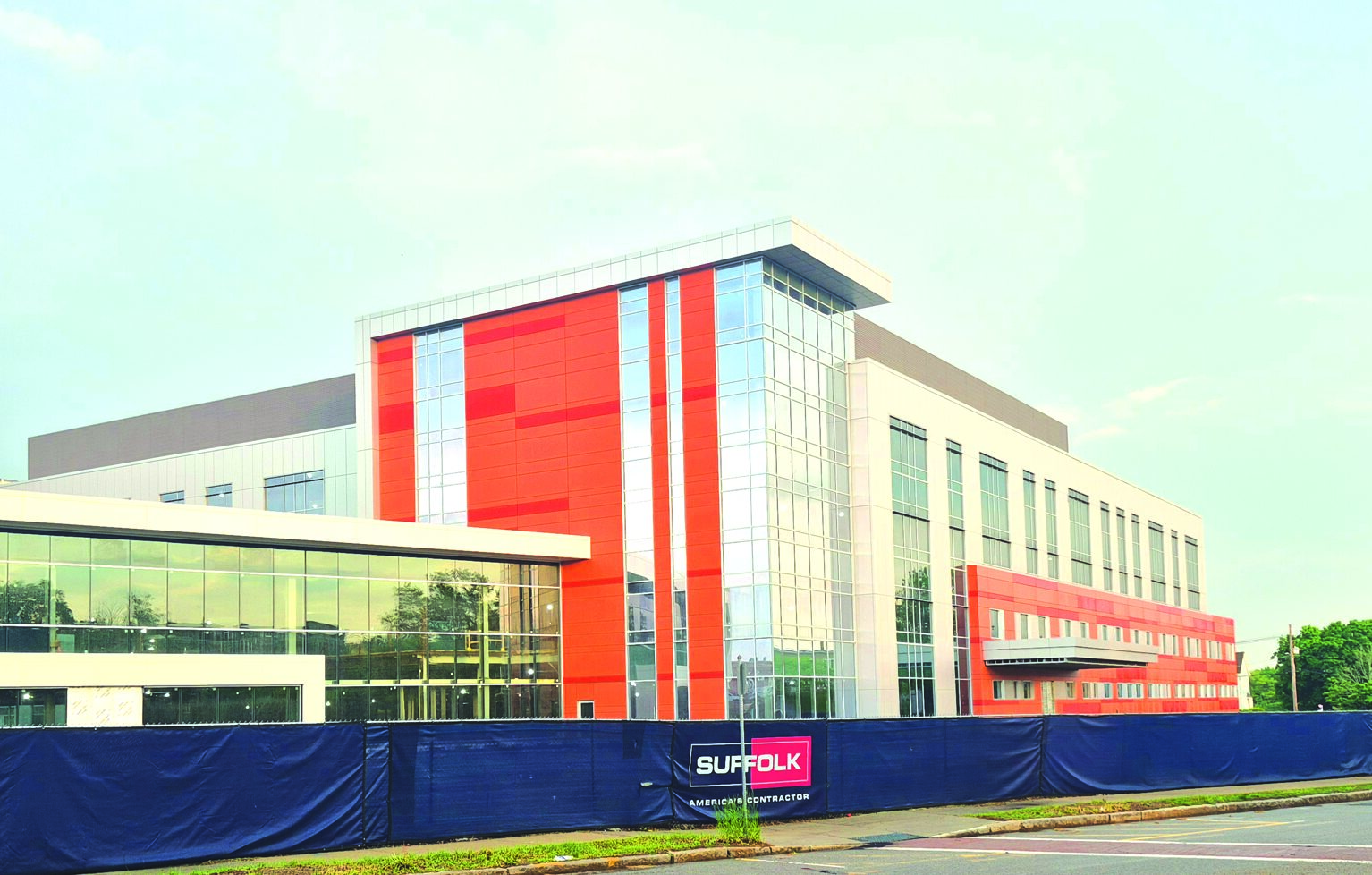
The House Bill 5553 has now passed the Massachusetts State Senate – on July 29 – and moves on to Massachusetts Gov. Maura Healey’s desk to sign.
Healey said she will sign the bill.
So barring any massive changes, it seems pretty likely that Norwood Hospital will be out of the hands of its current owner, Medical Properties Trust (MPT).
If you’re unaware, Norwood Hospital has been out of commission since June 2020 after almost 10 inches of rain fell in the area in about two hours. Then the operator who was rebuilding it, Steward Health Care, financially imploded, and its landlord, Medical Properties Trust, took over the construction of the site and has stated it has been looking for an operator in that time. That was the beginning of 2024.
But for many, almost two years is too long—hence the eminent domain.
Norwood State Rep. John Rogers and State Sen. Michael Rush said it’s been a lot of work since Rogers introduced the legislation back in January.
“Just had a good week actually,” Rush said. “I think the word euphoric would be about it, right Rep.?”
“I think it would be an understatement as to the level of euphoria we actually feel,” Rogers responded. “And not for ourselves. We’re mere, public, servants. State Sen. Rush and I are so happy, and feel euphoric for the people of Norwood and all the towns within the Norwood Hospital area. That hospital – that we so desperately need – will be up and running soon, because of our action to force the hand of an out-of-state corporation that places profit over patients.”
Rogers did not mince words about MPT.
“We’re here to kick them out of Massachusetts, once and for all,” he said.
And so what’s next? The legislation requires that the property be sold to a nonprofit entity. It will take effect and start the process of eminent domain in November, if MPT doesn’t offload the property in that time.
The pair said they believe if MPT doesn’t find a buyer, the state should have no trouble.
“Norwood was the biggest money maker of the whole operation,” Rush said.
“Norwood Hospital has always been in and among communities that have a healthy payer mix,” Rogers said. “It’s always been a money maker. The wealthier towns, the W Towns – Westwood, Walpole, Wellesley, Wrentham for example – led to the success of the hospital being situated where it was for more than a century.”
Rogers said this legislation is both a fail-safe and a motivation. If MPT doesn’t sell to someone in the next three months, the state will take it over and sell it to another operator.
“We’re saying to MPT, in addition to saying, ‘get out of our state!’ we are saying to them, ‘Cut a deal!’” he said. “One that we can accept, or the people of Massachusetts will cut you off now and forever. They will abhor the latter, because the acquisition cost for the government is going to be a fraction of what they could have made in the private sector, in the private market. They can make a good business judgment, and pick a suitor in the next three months.”
“We’re elated right now, but we’re also frustrated after six years here,” Rush said. “If you’re hearing any hostility, it’s just because it’s gone on too long.”
Rogers said it’s a big deal, as it has been previously reported that the hospital represented $2 billion a year in regional economic activity.
“With the hospital itself, in its last 24 months of operation, its net profits were $36 million,” he said. “Which is astonishing. But it tells the tale of Norwood. And in the old Caritas system, Norwood would have a $2 million surplus.”
“I think the likes of Mass General Brigham, Tufts, Beth Israel, and others all know that, so the list of suitors will be long,” Rogers said. “The Healey administration is well aware of prospective nonprofits.”
So what happens next? Rogers and Rush said when a new operator is found they have already started the process to speed up the regulatory processes that operator will need to fulfill before they start treating patients.
“Senator Rush and I, together with Congressman Stephen Lynch, had a conversation with Secretary (of Health and Human Services Dr. Kiame) Mahaniah, who guaranteed us he would expedite the emergency determination of need process, and he can do so within a period of three months. Which is remarkable.”
The pair estimated that, from around November or when a new operator is selected, it will take about two years to get the hospital’s interior work completed (right now it’s just the exterior), regulatory work done, and the staff hired to reopen Norwood Hospital.
“Two years is the longest it will take,” Rogers said.
The pair said they were relieved to get the legislation past the finish line.
“When you consider that less than 4 percent of every bill filed in any given session is enacted and signed into law, and so we were up against it in January when we filed it,” Rogers said. “But we just kept pushing. And the best incentive for Sen. Rush and I wasn’t anything going on up here, but the people of Norwood, and the surrounding areas. And it’s a good answer to those who wonder whether or not democracy works, because it was the people who made this happen.”
There was a huge grassroots effort throughout Norwood and beyond, with petitions, letter-writing campaigns (physical, snail mail even), rallies, and the creation of the Norwood Hospital Task Force.
Town Manager Tony Mazzucco released a letter about an hour after the news broke, and while he thanked Rush, Rogers, Senate President Karen E. Spilka and House Speaker Ronald J. Mariano, he said it was the community who came together to make this happen.
“We want to recognize the many individuals and groups who worked behind the scenes and on the front lines,” he wrote. “Task Force members gave countless hours of thoughtful, often difficult work to help shape a path forward. Our labor partners, whose engagement and commitment were critical throughout this process. And our first responders, who continue to serve this community and every community in the Commonwealth every day while contributing to this broader effort – their dedication does not go unnoticed.”
Everyone was taking a victory lap last week, Mazzucco included, but Mazzucco pointed out there is more work to do.
“There are still important steps ahead and a long road before us,” he said.”We will need the same spirit of collaboration and the same willingness to fight for a better future to see this through to completion. This is, in many ways, the end of the beginning. But today, we pause to recognize how far we have come – and the people who made it possible. Norwood had to show what a community can do when it refuses to give up on itself.”
Former Massachusetts Nurses Association (MNA) co-chair at Norwood Hospital, current Morton Hospital Registered Nurse, and MNA Board of Directors member Kathy Reardon said the new hospital can’t come fast enough.
“The MNA strongly supports this legislation and efforts to take this property via eminent domain, as the loss of Norwood Hospital has had a dramatic impact on access to needed care for residents throughout the region, resulting in significant overcrowding in the hospital emergency departments and dangerous delays in care impacting the safety for residents throughout a number of communities on the South Shore,” she wrote. “The collapse of Steward Healthcare, and the subsequent efforts of MPT to hold this vital resource hostage to their corporate greed and mismanagement is a travesty that this legislation attempts to address. Having represented the talented and dedicated nurses at Norwood Hospital for decades, we know and understand the valuable role this facility has provided this region and believe that this bill is essential to restoring the healthcare safety net for the patients in need of the services it can provide.”
About the author
Jeff Sullivan Covers local news and community stories.
More in this section
Selectmen discuss MWRA money, Town Common rules and Fire hirings
September 17, 2026
Comments